The last compositor on Binder Street
People editor · 3 September 2026
On this page
Jonah Voss spends a day with a printer who still sets type by hand for shop cards, funeral notices, and one stubborn literary magazine.
Nia Pell keeps her hair clipped back with a bulldog clip from the paper drawer. She will not be photographed with ink on her hands as if ink were a personality. Ink is a material. It goes on the disk, then the rollers, then the type, then the card, then the drying rack, then sometimes the cuff. She wipes the cuff without commentary. The workshop is a ground-floor room behind a shutter that still says KEYS CUT from a previous tenant. She left the ghost sign. People find her by it.
What she will print
She prints what still needs to be held. Shop cards that must survive a pocket. Funeral notices that a family wants to hand over rather than text. A quarterly pamphlet for a poetry group that refuses a website on principle and also because none of them wants to be the administrator. She will not print wedding stationery with fake crests. She will not print political leaflets that pretend to be neighbourhood news. She has a typed list of refusals on the wall, which saves argument and makes the room feel like a newsroom that chose a smaller beat.
Hand setting is slow in the way cooking from a whole bird is slow. You cannot hide a missing letter. You cannot undo a crooked line without distributing the type and starting again. Nia likes that the mistake is physical. Digital work, she says, hides the cost in a menu. Here the cost is time you can point at. A regular who runs the bait shop waits while she finds a spare ampersand. He does not check a phone. The waiting is part of the job he bought.
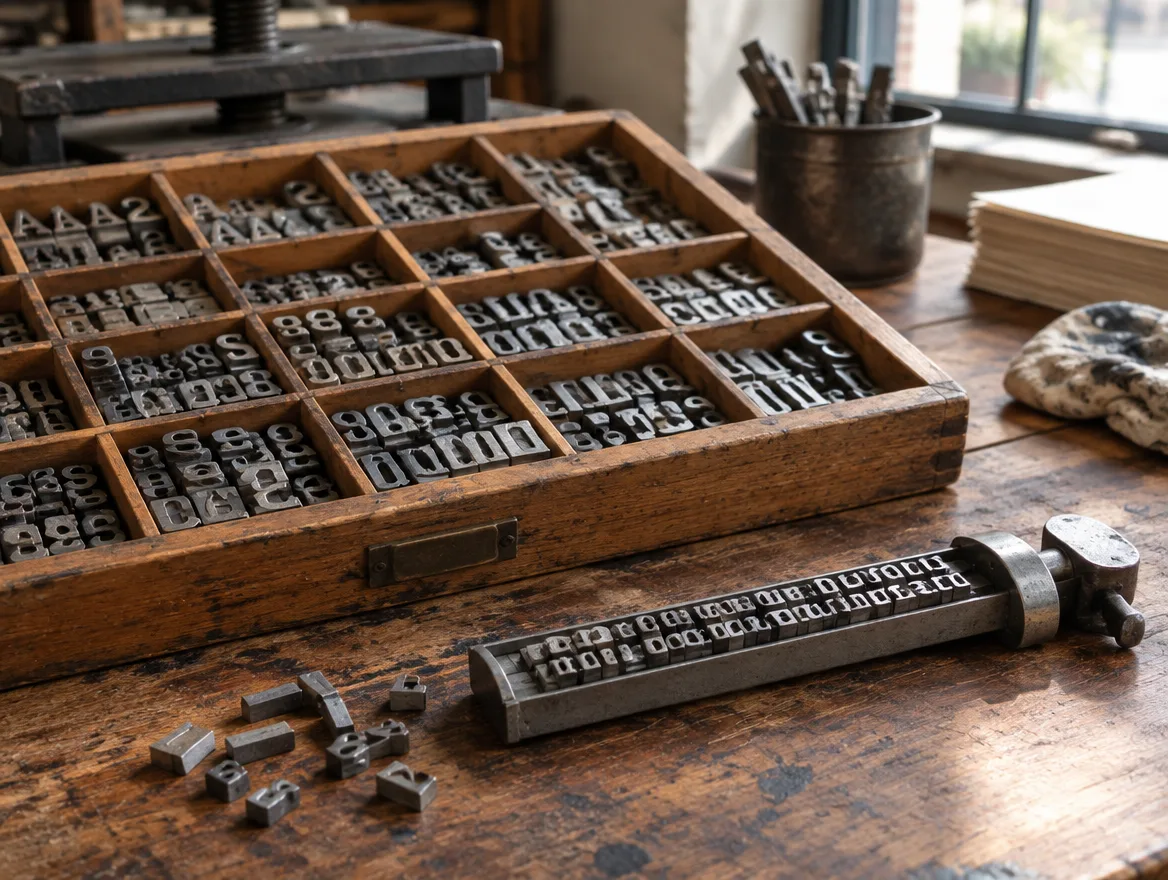
The magazine that refuses to die
The literary magazine is called Harbour Thread in this fiction. It has eighty subscribers and an editor who pays in cash and apples. Nia prints two hundred copies because the editor still believes in leaving piles in places that are not bookshops: the reading room, the night desk at the civic library, the stool by the soup pot. The poems are uneven. The object is not. Thick paper, a sewn spine, a cover that does not try to look like a lifestyle brand. When I asked why she subsidises it with shop-card profits, she said the street should have one thing that is not trying to sell the street back to itself.
There is no apprentice. Young printers she meets at a night class want Risograph and a studio with a sofa. She does not blame them. A hand press is a body job. Shoulders, wrists, the decision to stop before the impression crushes the type. She is fifty-two in this profile and has already taught herself to switch the heavy lifting to a rolling table. The last compositor is not a eulogy. It is a job description that got narrower until it became visible again. On Fridays she prints the reading-room notices for Lena, who pays in coins from the donations tin and a jar of lemon soap. Nia accepts both. Soap is useful. Coin is honest.
Proofing happens on cheap offcuts. She reads backwards, which still catches a missing letter faster than a screen. I tried it and missed three. She did not make a lesson of it. She just reset the line. The humility of the craft is not mystical. It is the knowledge that the card will be in someone’s pocket tomorrow, and a crooked shop name is a kind of disrespect. When the impression is right, she does not smile for an audience. She stacks.
Ink as ordinary work
Watching her distribute type is like watching someone pack a bag they have packed for twenty years. The hand knows the compartments. The eye still checks. She talks while she works if you have earned the talk by not reaching for the case. I asked whether the last compositor title bothered her. She said last is a journalist’s word. There is a night class. There is a person who emails from another city about buying the press. Last is a mood. The job is today’s cards.
By four the drying rack is full of bait-shop hours and a stack of notices for Tuesday soup. Nia washes rollers in a tray that used to be a photographic bath. The water goes grey, then she changes it, then she locks the shutter that still says KEYS CUT. If you only saw the sign you would think the street had failed to update. If you saw the rack you would know it had simply kept a craft that still has customers. Common Hours is not arguing for a revival. It is recording a person who already stayed.